FT, here.

Thursday, June 28, 2018
The first "known" financial technology
 |
| Morgan Museum, NYC |
(Small) Variations on a Theme: This blog's author Lund Presentation on "FinTech, TechFin, Competitive Markets: What Could Possibly Go Wrong?", here.
Wednesday, June 27, 2018
Sunday, June 24, 2018
Saturday, June 23, 2018
Friday, June 22, 2018
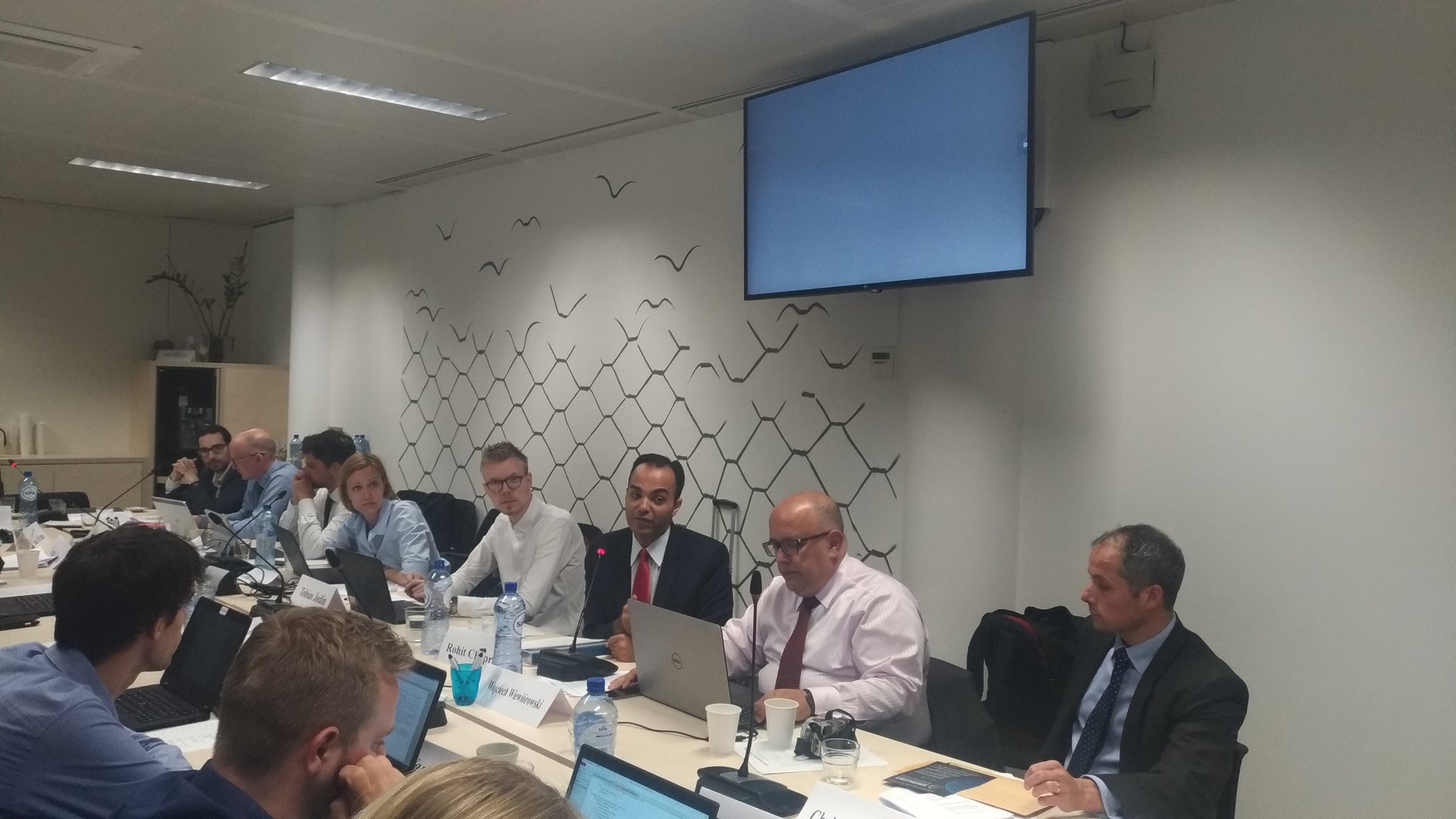
FinTech,TechFin, Competitive Markets: What Could Possibly Go Wrong?
S. Vezzoso (this blog’s author), presentation here. Please email me if you have any comment.
Thursday, June 21, 2018
Wednesday, June 20, 2018
Tuesday, June 19, 2018
Opinion of the European Banking Authority on the implementation of the RTS on SCA and CSC
EBA, here.
"In the event that the ASPSP does not have a system that enables it to adequately respond to the confirmation request sent by the provider initiating the payment, then the ASPSP should give PISPs the possibility of accessing the necessary data themselves, so as to allow them to make their own judgements on the sufficient availability of funds."
"Given that PSD2 does not limit the types of payment transactions a PISP is allowed to offer, and given the provisions in Articles 4(15) and 66(1) of PSD2 in particular, the EBA would like to clarify that a PISP has the right to initiate the same transactions that the ASPSP offers to its own PSUs, such as instant payments, batch payments, international payments, recurring transactions, payments set by national schemes and future-dated payments."
"In the event that the ASPSP does not have a system that enables it to adequately respond to the confirmation request sent by the provider initiating the payment, then the ASPSP should give PISPs the possibility of accessing the necessary data themselves, so as to allow them to make their own judgements on the sufficient availability of funds."
"Given that PSD2 does not limit the types of payment transactions a PISP is allowed to offer, and given the provisions in Articles 4(15) and 66(1) of PSD2 in particular, the EBA would like to clarify that a PISP has the right to initiate the same transactions that the ASPSP offers to its own PSUs, such as instant payments, batch payments, international payments, recurring transactions, payments set by national schemes and future-dated payments."
Amazon—An Infrastructure Service and Its Challenge to Current Antitrust Law
L. Khan, here (pp. 99 ff.), here.
Projet conjoint sur les algorithmes et leurs enjeux pour l'application du droit de la concurrence
Autorité de la concurrence, Bundeskartellamt, ici.
Monday, June 18, 2018
Committee on Economic and Monetary Affairs: Structured Dialogue with Margrethe Vestager
Video, here (from 15:17:30).
15:40:09 "the banking sector is developing because of FinTech, new ways of doing payments, new ways of doing banking and that will push the banking sector into restructuring"..."as I see it...the banking sector is in much better shape now than it was just a few years ago"
15:40:09 "the banking sector is developing because of FinTech, new ways of doing payments, new ways of doing banking and that will push the banking sector into restructuring"..."as I see it...the banking sector is in much better shape now than it was just a few years ago"
Sunday, June 17, 2018
Saturday, June 16, 2018
Preview of the upcoming discussions at ASCOLA 2018 NYC
Here.
And forget the distinction between the main track and the parallel sessions: great topics everywhere!
(mine included, of course 😊. I hope I’ll do it justice. First draft of my paper coming soon. Abstract:
‘The use of technology to support the production and delivery of financial services has a long history, spanning from the written records of financial transactions in Mesopotamia, to much more recent developments, such as the first use in 1995 of the World Wide Web to provide online account checking, and the introduction of high‐frequency trading. In the last ten years, however, the adoption of digital technology in the financial sector, generally known as FinTech, has undergone a dramatic acceleration, both in the West and the East. In the latter, arguably, the magnitude of the transformative powers at work is most visible. Ant Financial Services Group, a spin‐out of e‐commerce platform Alibaba, lately achieved a market value of around €127 billion ($150 billion) based on the success of its digital payments system Alipay and money market fund Yu'e Bao. Tencent's popular instant‐messaging app WeChat incorporates an online payment service, WeChat Pay, which is used by a substantial proportion of its one billion monthly users. A strong trend towards mobile payments is also experienced in other countries, such as India. Ongoing transformations in the financial sector are significant and global, which creates opportunities and challenges for consumers, traditional and non‐traditional financial service providers, and regulators alike. Incumbent banks have expressed concerns about the disruptive potential and the dangers of Big Tech, which the Paper calls TechFin adopting the definition of Alibaba's CEO, Jack Ma. While banks brace themselves for potentially unsettling market developments, financial regulators discuss the impact of new technologies on processes and business models, as well as the need for a changed supervisory methodology. The challenge for most financial regulators is to ensure that the multiple benefits offered by these new technologies are realized without hampering consumer protection and compromising the stability of the financial system. The Paper embraces a different perspective and explores some of the likely consequences of FinTech in terms of market structure and competition. Keeping the literature strands on platforms in the background, we analyse the current push towards the “platformization” of banking services. If the financial sector moves towards production and distribution models where the banks see their pivotal role diminished, this is certainly of concern to financial regulators, who should at the very least adapt their supervisory methodologies to the new situation. From a competition policy perspective, however, it is important to identify the types of market structure that could better satisfy consumers' banking and financial needs. The Paper makes the point that the analysis of the possible impact of the FinTech revolution on competition dynamics in the financial sector is particularly relevant especially to make sure that the benefits of innovation are harnessed for the good of consumers. This perspective is solidly ingrained in the “long term” view of competition policy.’)
And forget the distinction between the main track and the parallel sessions: great topics everywhere!
(mine included, of course 😊. I hope I’ll do it justice. First draft of my paper coming soon. Abstract:
‘The use of technology to support the production and delivery of financial services has a long history, spanning from the written records of financial transactions in Mesopotamia, to much more recent developments, such as the first use in 1995 of the World Wide Web to provide online account checking, and the introduction of high‐frequency trading. In the last ten years, however, the adoption of digital technology in the financial sector, generally known as FinTech, has undergone a dramatic acceleration, both in the West and the East. In the latter, arguably, the magnitude of the transformative powers at work is most visible. Ant Financial Services Group, a spin‐out of e‐commerce platform Alibaba, lately achieved a market value of around €127 billion ($150 billion) based on the success of its digital payments system Alipay and money market fund Yu'e Bao. Tencent's popular instant‐messaging app WeChat incorporates an online payment service, WeChat Pay, which is used by a substantial proportion of its one billion monthly users. A strong trend towards mobile payments is also experienced in other countries, such as India. Ongoing transformations in the financial sector are significant and global, which creates opportunities and challenges for consumers, traditional and non‐traditional financial service providers, and regulators alike. Incumbent banks have expressed concerns about the disruptive potential and the dangers of Big Tech, which the Paper calls TechFin adopting the definition of Alibaba's CEO, Jack Ma. While banks brace themselves for potentially unsettling market developments, financial regulators discuss the impact of new technologies on processes and business models, as well as the need for a changed supervisory methodology. The challenge for most financial regulators is to ensure that the multiple benefits offered by these new technologies are realized without hampering consumer protection and compromising the stability of the financial system. The Paper embraces a different perspective and explores some of the likely consequences of FinTech in terms of market structure and competition. Keeping the literature strands on platforms in the background, we analyse the current push towards the “platformization” of banking services. If the financial sector moves towards production and distribution models where the banks see their pivotal role diminished, this is certainly of concern to financial regulators, who should at the very least adapt their supervisory methodologies to the new situation. From a competition policy perspective, however, it is important to identify the types of market structure that could better satisfy consumers' banking and financial needs. The Paper makes the point that the analysis of the possible impact of the FinTech revolution on competition dynamics in the financial sector is particularly relevant especially to make sure that the benefits of innovation are harnessed for the good of consumers. This perspective is solidly ingrained in the “long term” view of competition policy.’)
Friday, June 15, 2018

Thursday, June 14, 2018
Radical Markets: Uprooting Capitalism & Democracy for a Just Society
G. Weyl, Talk at Google moderated by its Chief Economist, here.
Wednesday, June 13, 2018
Tuesday, June 12, 2018
Monday, June 11, 2018
Saturday, June 09, 2018


Friday, June 08, 2018
Thursday, June 07, 2018
Several measures announced aimed at streamlining and simplifying mergers' procedures for companies
Autorité de la concurrence, here.
The effect of market consolidation on innovation in the HDD industry
A.R. Bennato, S. Davies, F. Mariuzzo, P. Osmosi, here.

Transparency and the Marketplace for Student Data
C. Russell, J. Reidenberg, E. Martin, T. Norton, here.
Wednesday, June 06, 2018
Tuesday, June 05, 2018
Monday, June 04, 2018
Entry, Innovation and Productivity Growth in the U.S. Economy: Facts and Open Questions (i.e., Puzzles)
J. Haltiwanger, Presentation here.
GitHub users are already fuming about the company’s sale to Microsoft for $7.5bn
Quartz, here.
Heise.de, hier: "Mal losgelöst von steuerlichen Erwägungen, die aus Microsoft-Sicht für die Akquisition sprechen, mag es für die Redmonder wohl auch darum gehen, die riesige Zahl der registrierten GitHub-Anwender – die Rede ist von 27 Millionen – zu den eigenen Angeboten insbesondere im Azure-Umfeld zu locken. Wie verheißend mag für Microsoft ein direkt aus GitHub nach Azure führender Deploy-Button sein!"
(Follow the data?)
Heise.de, hier: "Mal losgelöst von steuerlichen Erwägungen, die aus Microsoft-Sicht für die Akquisition sprechen, mag es für die Redmonder wohl auch darum gehen, die riesige Zahl der registrierten GitHub-Anwender – die Rede ist von 27 Millionen – zu den eigenen Angeboten insbesondere im Azure-Umfeld zu locken. Wie verheißend mag für Microsoft ein direkt aus GitHub nach Azure führender Deploy-Button sein!"
(Follow the data?)
Sunday, June 03, 2018
Saturday, June 02, 2018
Tecnologia e lavoro prima della Rivoluzione Industriale: Il vetro di Murano
F. Trivellato, Video qui.
Friday, June 01, 2018
Attempts at overcoming surveillance capitalism? Good luck with that
E. Morozov, video here (from 20:25) - at Trento Economics Festival.
Subscribe to:
Posts (Atom)